With a passion for preserving the beauty and integrity of fine art, I provide professional painting conservation and restoration services tailored to the individual needs of each artwork. Based in Oxfordshire, I specialize in the cleaning, repair, and restoration of paintings using advanced conservation techniques, museum-quality materials, and a meticulous approach to ensure the long-term preservation of your art collection.
My approach to conservation is defined by minimal intervention, precision, and a deep respect for original materials. I integrate traditional restoration methods with modern conservation science to ensure the authentic preservation, stability, and aesthetic integrity of artworks and cultural artifacts.
Artist Bio
I am a painting conservator, graduated from the Hungarian University of Fine Arts in 2009, with over a decade of professional experience in the conservation and restoration of artworks. My practice is dedicated to preserving cultural heritage through a careful balance of traditional craftsmanship and contemporary conservation science.
Alongside easel paintings, I have extensive experience in the conservation of wall paintings, including murals, sgraffito, and secco techniques, as well as the restoration and decorative treatment of historic and listed buildings. My background in decorative painting has deepened my understanding of historical surface techniques and material authenticity.
I have worked on paintings from private collections and have contributed to conservation projects at Queen’s College, Oxford.
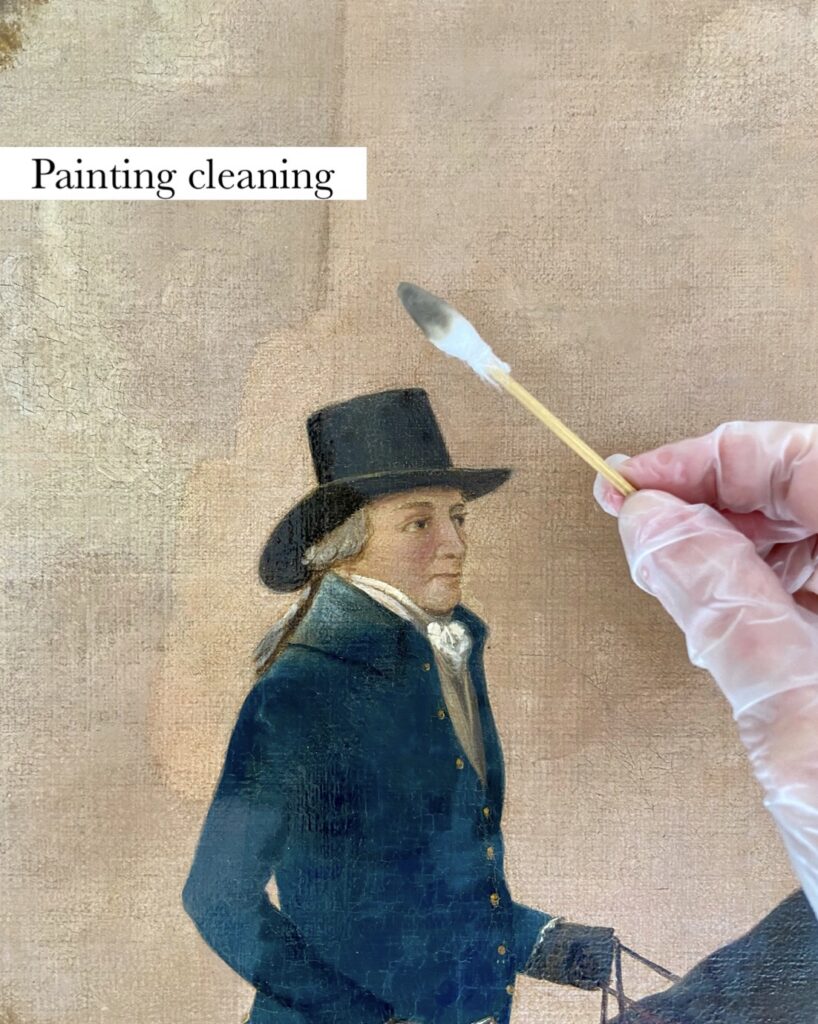
Dust removal reveals remarkable results
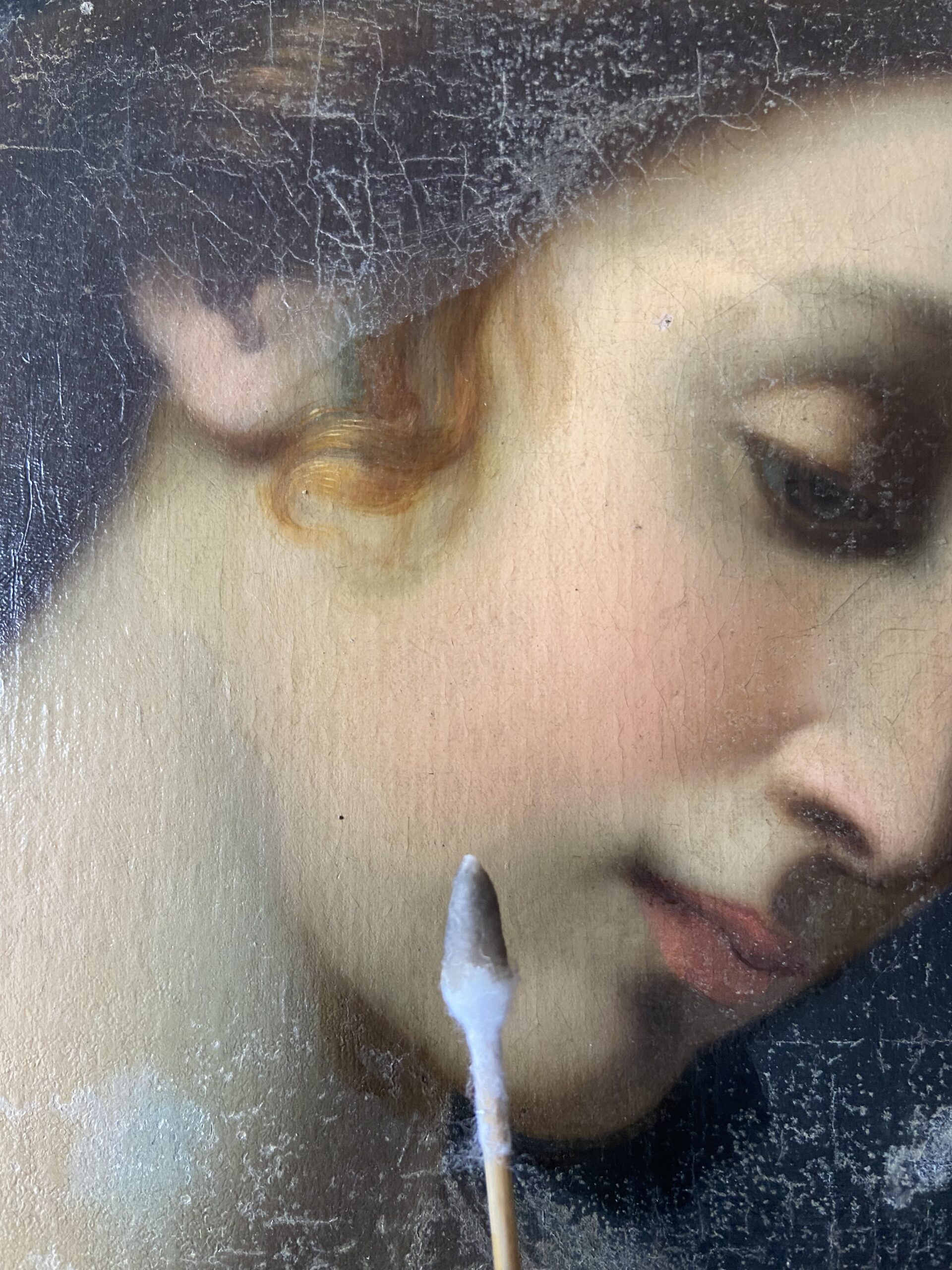
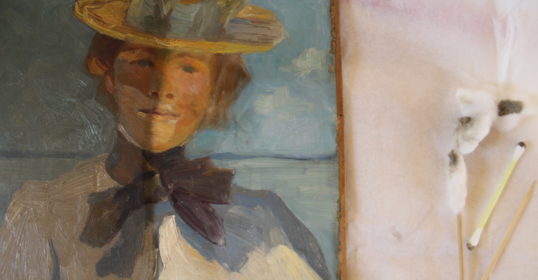
Surface cleaning of the face restored its original tones
Over time, paintings can become visually dull and opaque as layers of dust, grime, and nicotine contamination accumulate on the surface, obscuring their original colours and details. Professional surface cleaning and painting conservation can make a remarkable difference in revealing the artwork’s true appearance.
Using carefully selected conservation-grade solvents and controlled cleaning techniques, these unwanted surface deposits can be gently and safely removed without affecting the original paint layers. Once the cleaning process is complete, the painting’s original colours and tonal balance are restored, allowing the artwork to regain its depth, clarity, and visual impact.
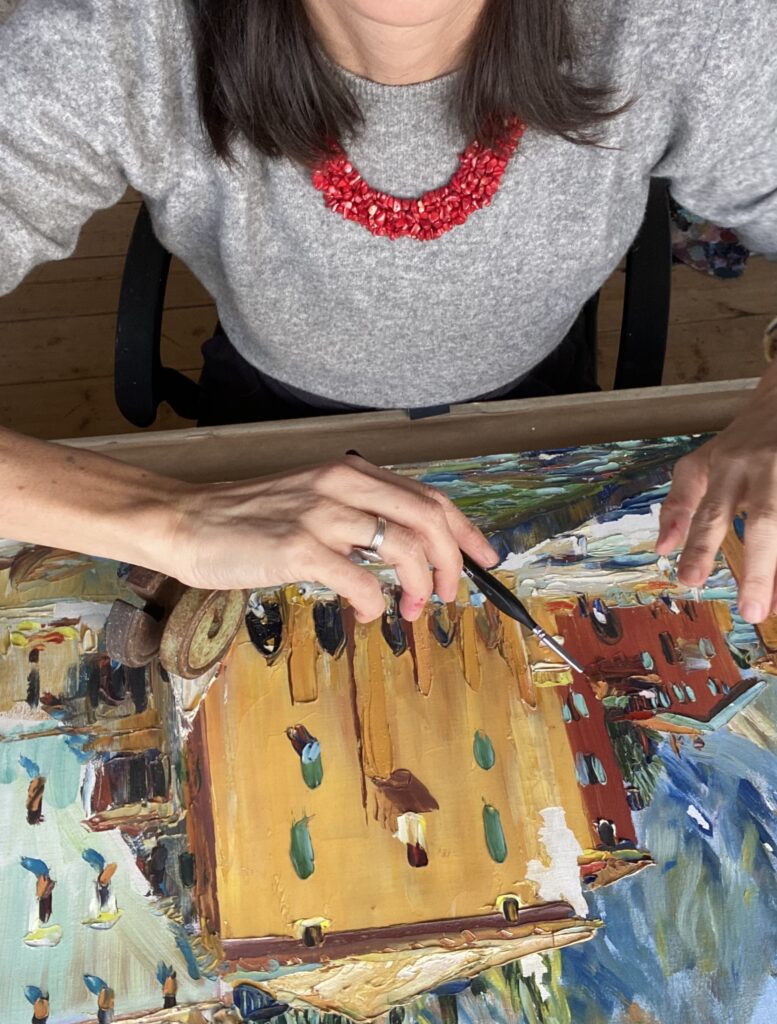
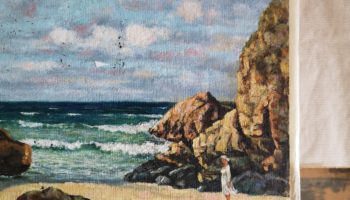
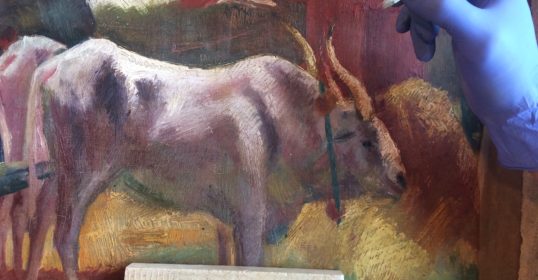
By filling larger areas of paint loss on this Italian landscape painting helps bring the artwork back to its original condition.
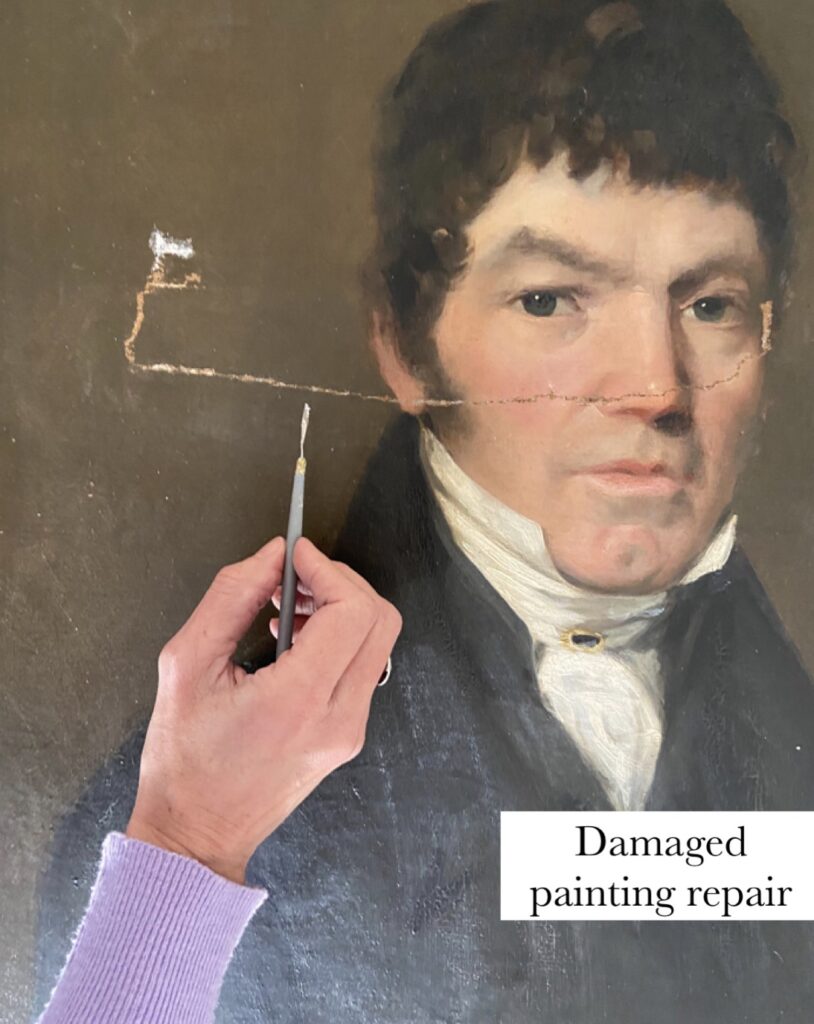
Restoration of a damaged painting requires a highly delicate approach and a deep understanding of historical artistic techniques. Each conservation treatment is carefully tailored to the specific condition of the artwork, as damage can vary widely in type and severity.
Common issues include surface abrasions, water damage, cracking, flaking paint, areas of paint loss, and structural damage such as tears in the canvas. In cases of canvas tears, the support can be professionally repaired to achieve a stable and visually seamless result. Losses in the paint layer are carefully reintegrated through expert retouching, matching the original brushwork and artistic technique to ensure a coherent and harmonious appearance.
The goal of every intervention is to restore the visual integrity of the painting while respecting its authenticity and preserving as much of the original material as possible.
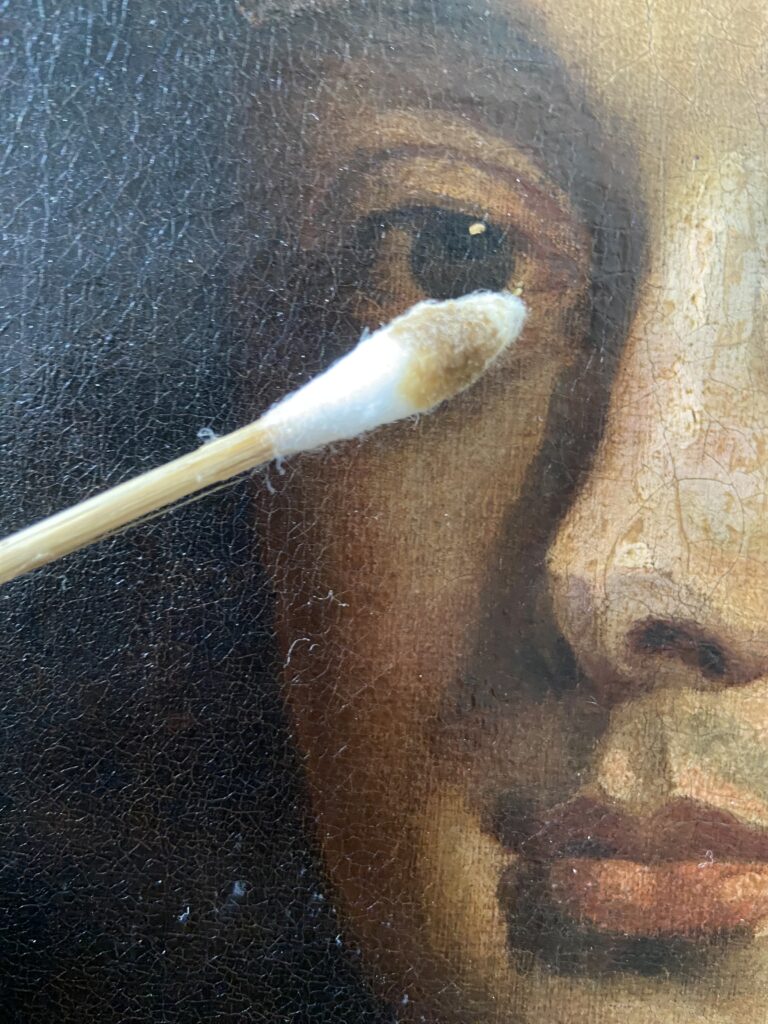
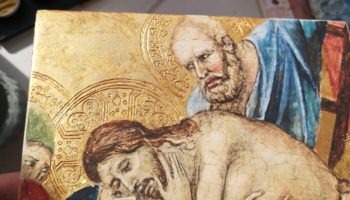
Discoloured varnish removal
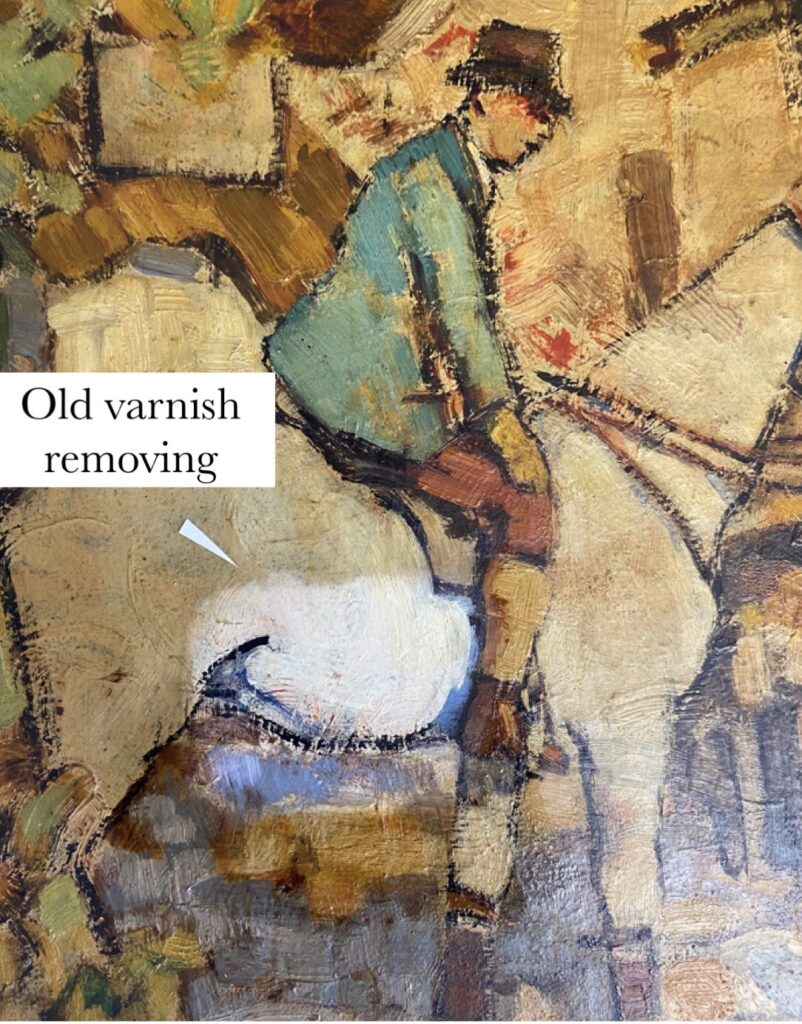
Over time, the varnish layer on a painting can become discoloured and develop fine micro-cracks due to aging. Exposure to light, environmental conditions, and natural chemical reactions often causes varnish to yellow or darken, sometimes turning an amber or deep brown tone. This deterioration can significantly alter the overall appearance of the artwork, reducing its vibrancy, contrast, and visual clarity.
Professional varnish removal and conservation treatment can safely address this issue, restoring the painting’s original tonal balance and allowing the true colours and details of the artwork to re-emerge.
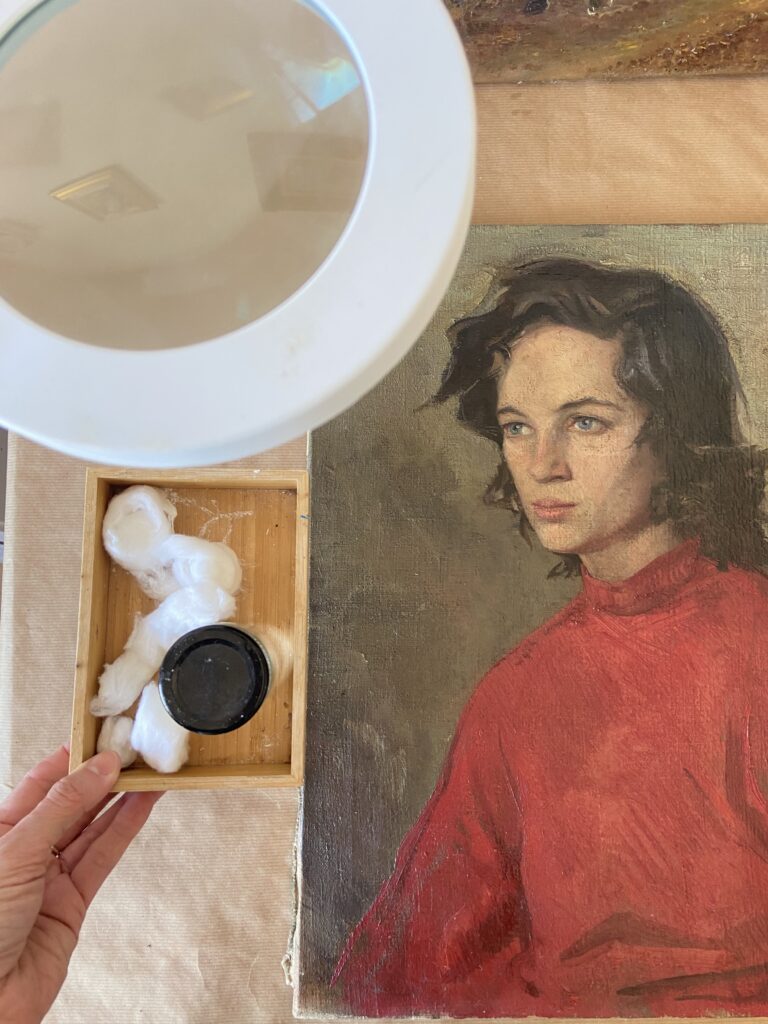
Under conservation
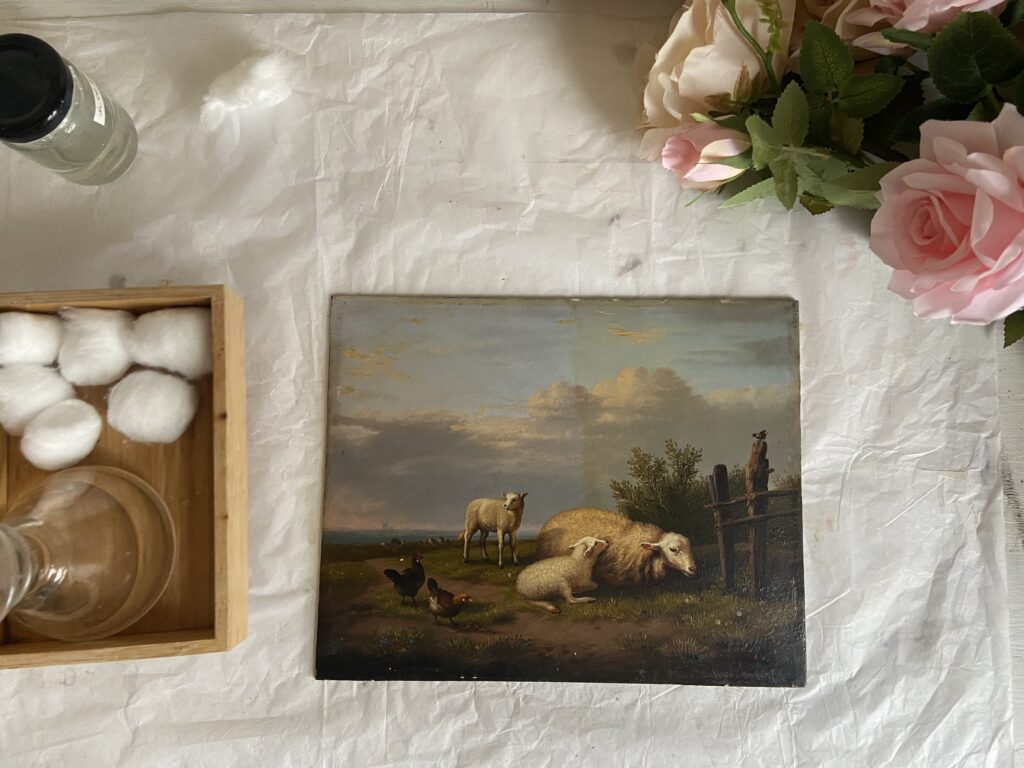
Flaking paint consolidation is a delicate and essential part of painting conservation. One of the fundamental principles of conservation practice is that all interventions should be minimal and reversible. This ensures the long-term integrity of the artwork and allows for future treatments without compromising the original material.
In my practice, I carefully select conservation-grade materials, prioritising water-based systems and the least toxic products available when appropriate. This approach ensures safe, stable, and controlled consolidation of flaking paint layers while respecting both the artwork and its historical authenticity.
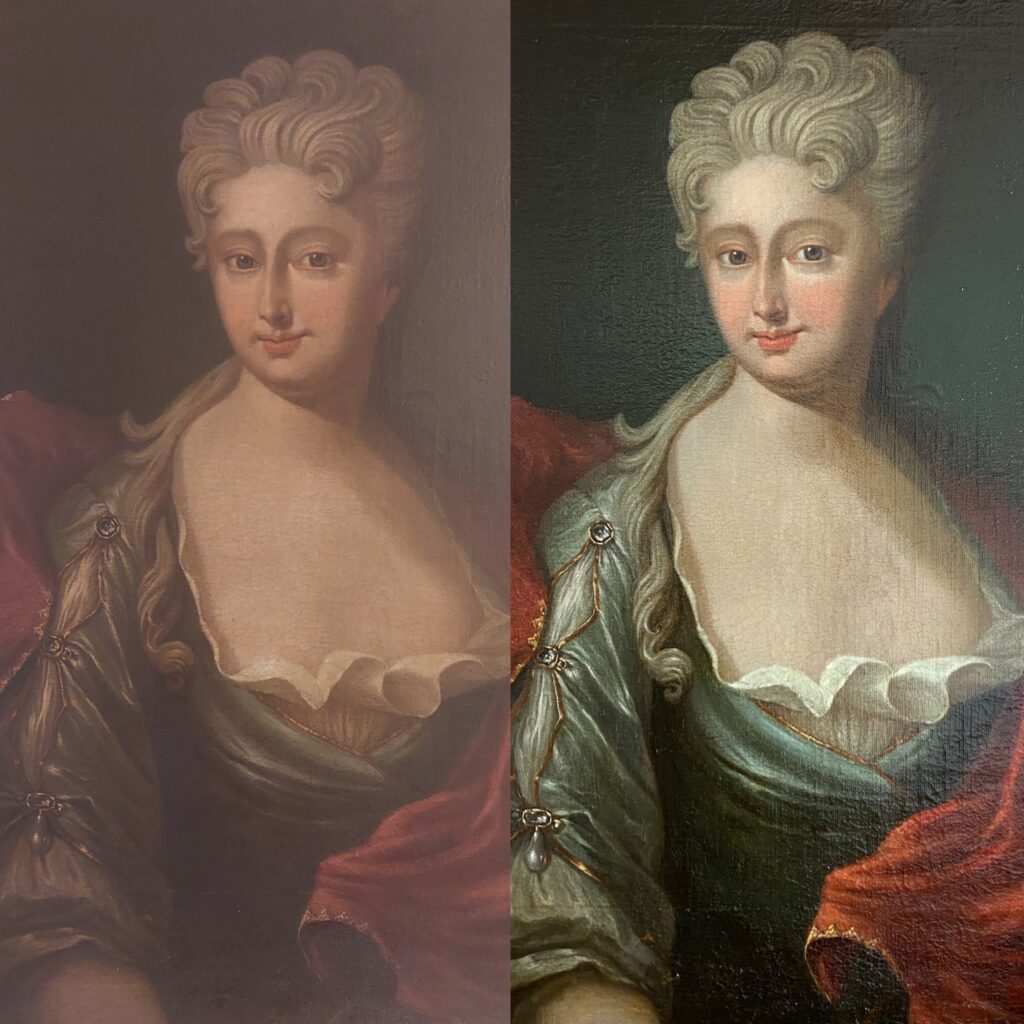
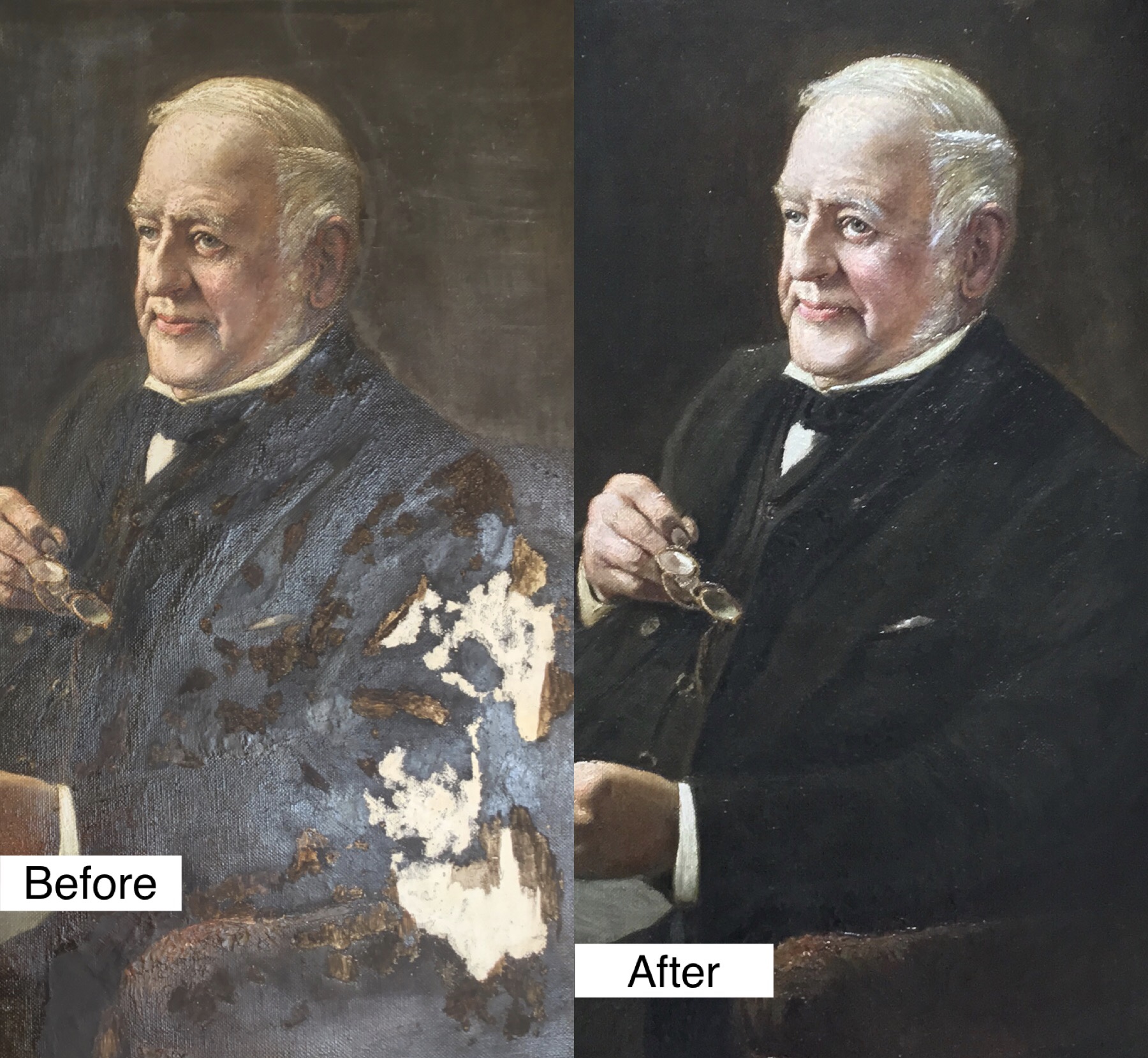
The portrait shows the difference before and after cleaning and re-varnishing
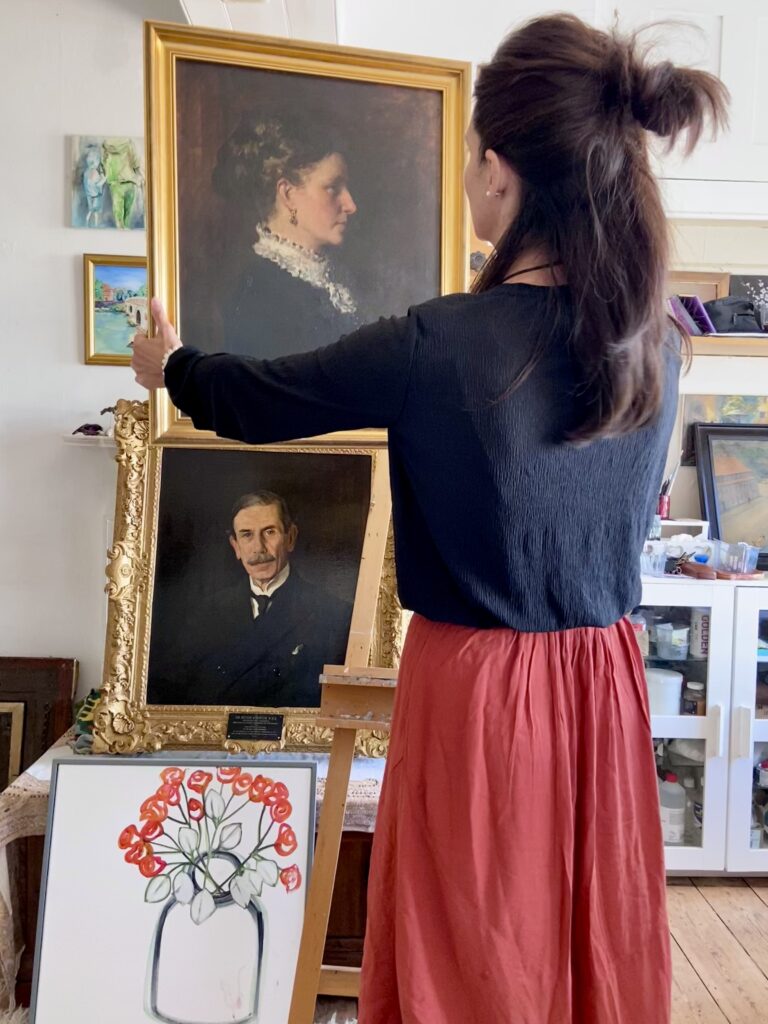
Family portraits are invaluable cultural and emotional treasures that connect generations and preserve a shared sense of identity and history. Conserving their condition is essential to ensure that their beauty, meaning, and authenticity can be appreciated by future generations.
Through professional painting conservation and restoration, family portraits can be carefully stabilised, cleaned, and treated to prevent further deterioration, allowing their original character and visual richness to be preserved for years to come.
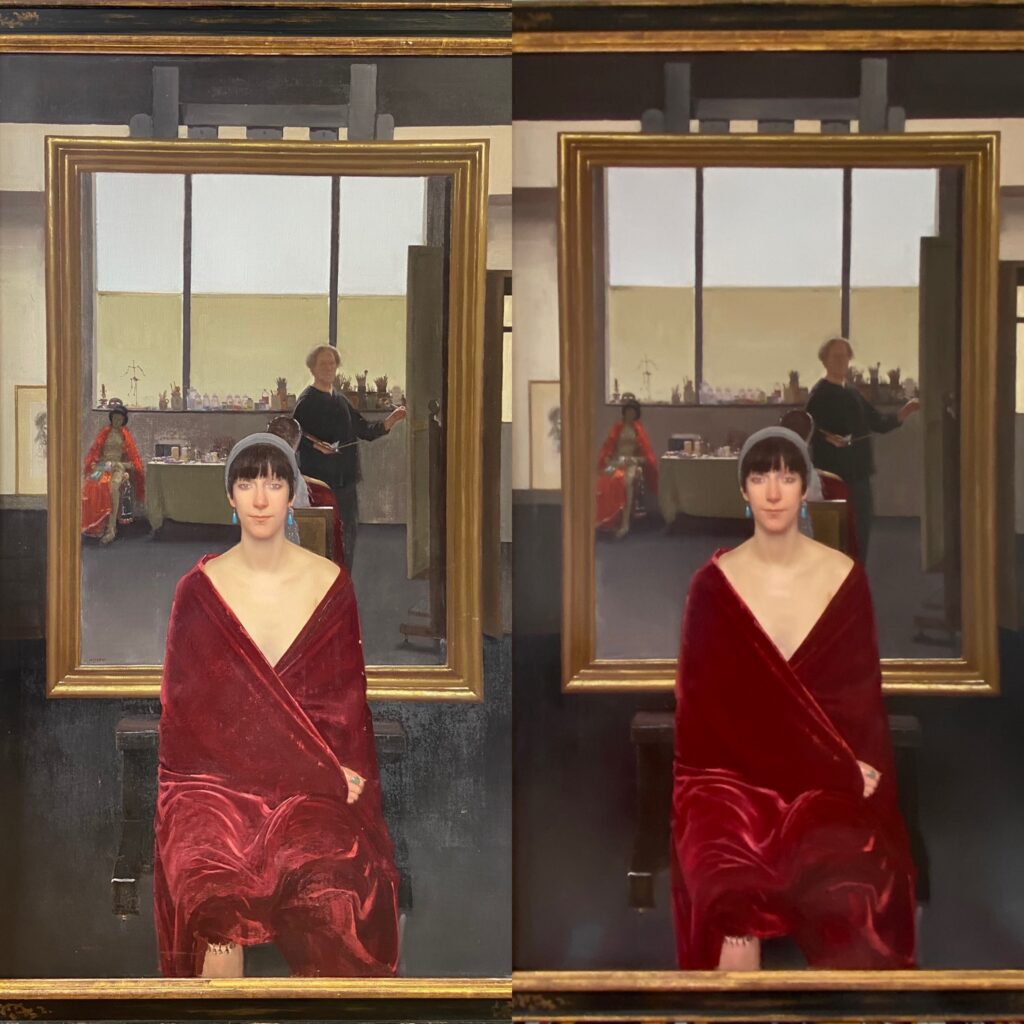
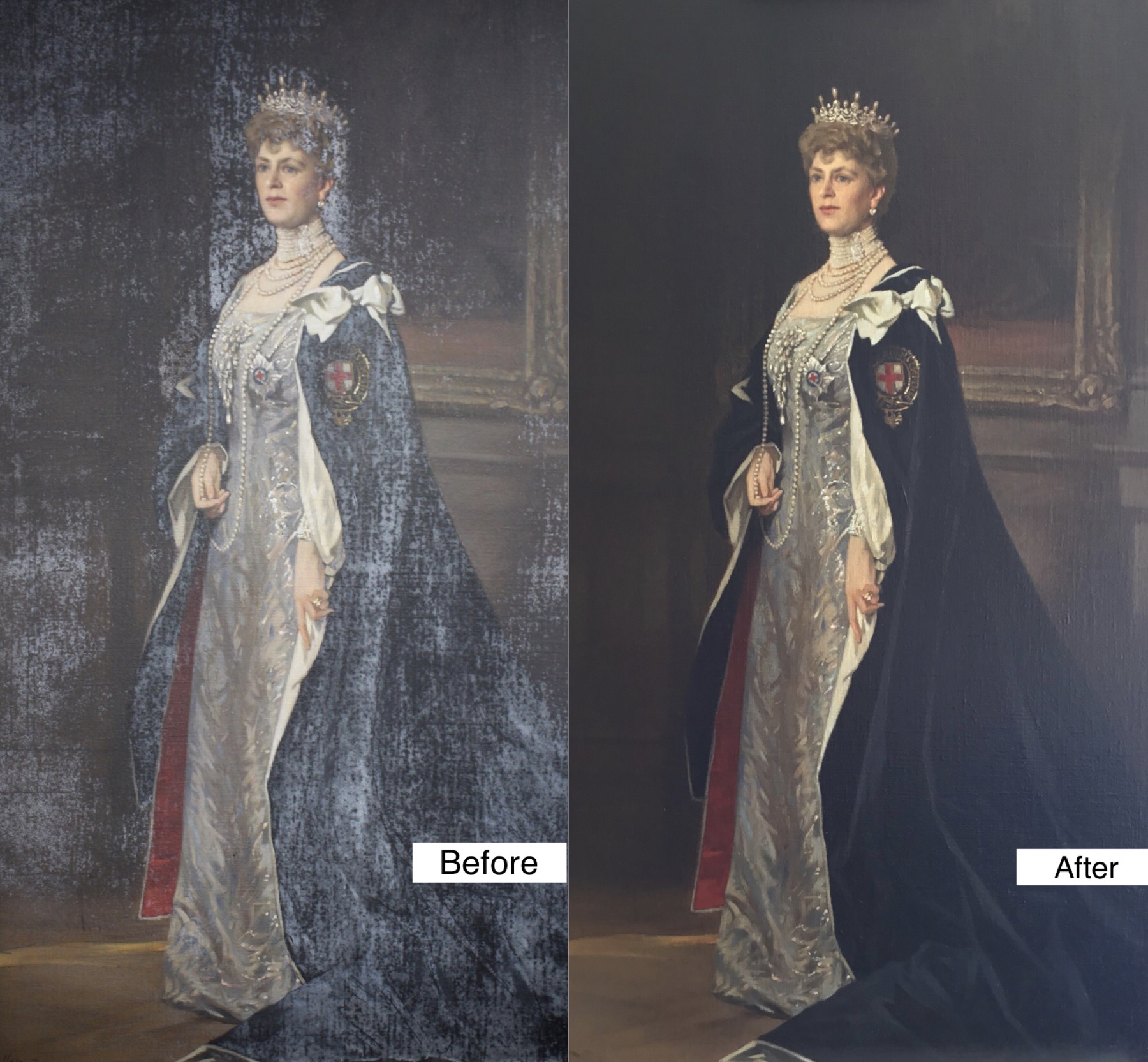
During overseas transportation, this painting suffered water damage and condensation, which affected both the canvas and the varnish layer, significantly altering its visual appearance. The image on the left shows the condition before restoration, while the image on the right shows the restored state.
Condition report and Treatment report are essential components of professional painting conservation practice. Condition report provides a detailed assessment of the artwork prior to treatment, documenting its physical state, structural issues, surface deterioration, previous restorations, and any areas of damage or vulnerability.
Treatment report records all conservation interventions carried out on the artwork, including the materials and methods used, as well as the reasoning behind each decision. Together, these documents ensure full transparency, ethical practice, and provide an invaluable reference for future conservation and long-term preservation of the artwork.
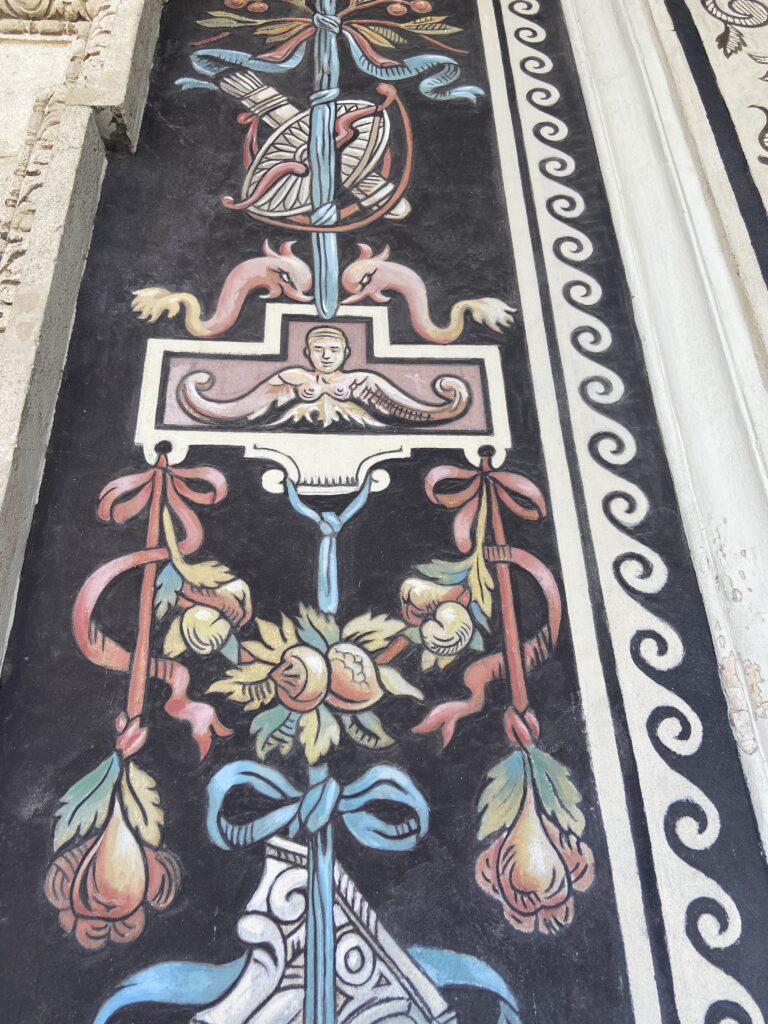
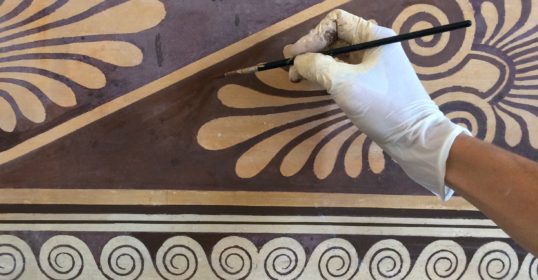
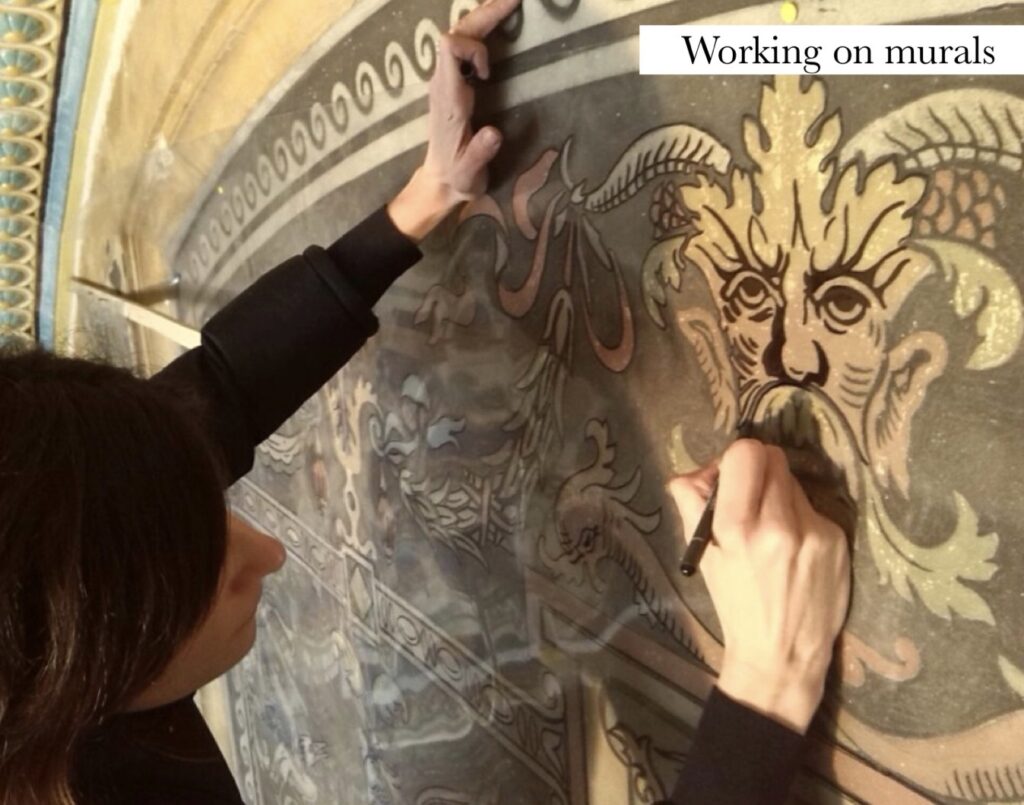
Conservation of wall paintings and murals requires a highly specialised approach that combines technical expertise, historical understanding, and sensitive restoration methods. These large-scale artworks are often integral to historic and listed buildings, making their preservation essential for maintaining cultural heritage.
Through careful assessment, stabilisation, cleaning, and restoration, wall paintings and murals can be preserved while respecting their original materials, techniques, and architectural context.
wall paintings / marble imitation / frescoes / secco / sgraffito
By delivering or leaving an Artwork at the Studio (whether for assessment, treatment, storage or any other purpose), the Client acknowledges and agrees that these Terms & Conditions apply to the Artwork and the services to be provided, and that the Client is bound by them. The Client’s delivery or continued presence of the Artwork at the Studio constitutes acceptance of these Terms.
The Client warrants that they are the legal owner of the Artwork or are authorised to act on behalf of the owner, that the Artwork is free from any third-party charges, and that no third party has any lien or claim over it. The Client shall indemnify the Studio against any claim arising from breach of this warranty.
A written estimate/quote and, where applicable, a condition report will be provided and form part of the contract. Any work outside the agreed scope will only be carried out following the Client’s written consent. The Studio will use reasonable skill and care in performing the Services.
1.1.The quotation is subject to the availability of labour and used materials.
1.2.On receiving and assessing the artwork the Brushstrokes-ann reserves the right to adjust the quotation should further or less work be required, the Client will be informed of the quotation change.
1.3.All quotations are valid for a period of 3 month.
1.4.On completion of the Conservation work Brushstroke-Ann will send the Client an invoice, and the Client will pay for the work on receipt of the invoice by bank transfer or cash.
1.5.The payment is due to the collection. I’ll not be able to release the artwork until the Client has paid in full.
1.6.I take a 50% deposit at the beginning of the Conservation work the remaining amount of 50% of the invoice is payable once the conservation work has been completed prior to collection of delivery of the artwork.
1.7.I take a photographic record of the artwork’s condition before, during the conservation and after treatment for marketing purposes, if the Client does not wish to publish these photos, please let me know in writing.
1.8. Artworks remaining at the studio for 28 days following an assessment report or services are completed will be subject to a charge of £20 per item per week.